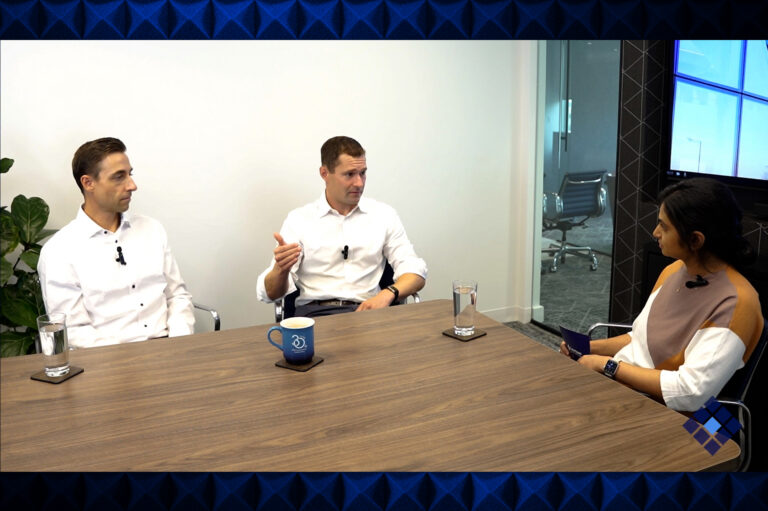
This episode of the Front & Center podcast zeros in on one of the largest industrial markets in the world: Southern California. As a microcosm of the wider industrial landscape, this economically diverse market provides insight into the sector’s future.
Laura Clark, CEO of Rexford Industrial, a REIT focused on industrial real estate in infill Southern California, joins host and Senior Investment Strategist Uma Moriarity to share her observations, from where the industrial sector is in the real estate cycle to the impact of retail and supply chain shifts. Uma and Laura explore the shift from e-commerce to omnichannel retail, what tenants now want from their buildings, the role of AI and technology in the supply chain, and why the basics of real estate (location, functionality, and supply) still drive long-term value.
Uma (00:02.053)
Welcome back to another episode of Front and Center. I’m Uma Moriarty, senior investment strategist and global head of sustainability here at Center Square. Over the last several years, every supply chain story, whether it’s port backlogs or tariff whiplash and pushback towards near shoring versus onshoring, all of that we’ve heard about.
It really runs through Southern California as one of the busiest port complexes in the country and one of the largest industrial markets just in the world. Understanding how that market is evolving, I think, just tells us a great insight into where the industrial sector really goes from here. And after a decade of e-commerce-driven growth amid a more fragmented global trade landscape.
As retailers are blurring the line between physical stores and fulfillment, as we’re seeing a lot of demand coming through from the build-out of the digital infrastructure we’re building globally, all of this is impacting the industrial landscape. It’s a conversation that will be about cycles, about what’s structurally changing underneath them. I think few people are better positioned to unpack all of this than my guest today, Laura Clark. She’s a CEO of Rexford Industrial.
Whose portfolio sits at the center of Southern California’s industrial markets and the ports that feed it. So, Laura, I’m thrilled to have you on today. Thank you for joining us.
Laura Clark (01:26.978)
Thank you, Uma, so much for having me today. I’m excited for this conversation and thank everyone for joining the podcast.
uma (01:34.044)
So, Lori, you stepped into the CEO role at Rexford at an interesting moment for the industrial sector, coming off of just really incredible demand, low interest rates. And in the cyclical business that is real estate, it’s not surprising that all of that led to a ton of new supply. And we’ve been working through that for a few years now. How would you characterize where we are in the cycle for industrial as a whole?
Laura Clark (02:01.142)
Yeah, Uma, at this point, I believe that we are moving through the bottom of the cycle and we are seeing some signs of recovery and some encouraging signs of recovery. Demand has improved. we’ve saw positive net absorption last quarter in the market. leasing activity has picked up and even through this quarter, and new supply has fallen dramatically as well. So the market, as you mentioned, is still working through some excess space. we believe that the backdrop is getting healthier.
I think it’s important to note that at the same time, new construction has fallen dramatically, and future supply is likely to be even more constrained due to increasing regulatory hurdles that have come into place in just the last few years. So, in our view, the market’s moving through the trough, and we’re headed towards certainly a more construction period of fundamentals for the for the overall infill Southern California market.
uma (02:55.164)
Yeah, I think what you mentioned in terms of the barriers on supply are such an important piece to consider. In real estate across the board, I think we’re seeing supply coming down because you’re seeing not only construction costs continuing to rise, you’re seeing now especially the cost of financing is also increasing pretty dramatically. So really tough to get new development to pencil, let alone having to then deal with all of the
the barriers from a regulatory perspective that are that are kind of keeping new supply at bay in general. How do you think that is then influencing the way that you are considering capital deployment today?
Laura Clark (03:36.623)
So, our approach to capital deployment and allocation is very disciplined, and we are very much focused around allocating capital to the highest risk adjusted returns. And at the end of the day, that’s really what’s behind our portfolio realignment. We recently announced a very significant portfolio realignment, a disposition of about $2 billion of assets within our portfolio. And that’s really with the focus of concentrating our portfolio around the assets that have the strongest.
Potential for long-term cash flow growth and value creation potential. So in today’s environment, we’re focused on enhancing the portfolio quality, the durability and resilience of our cash flow, and preserving balance sheet flexibility, very important today. And we’re going to be continuing to deploy capital where we see the highest risk-adjusted returns. So today, where we’re focused on capital deployment is on our high-yielding development and repositioning opportunities that exist within our own portfolio.
We’re also focused on share repurchases when we see a disconnect between public market value and the intrinsic value of a company. So the key here is we’re staying disciplined, we’re being patient, and we’re going to continue to allocate capital where it creates and drives the most long-term shareholder value.
uma (04:57.266)
I think one of the really interesting parts of the industrial landscape, in addition to everything that you mentioned, is as is it relates to capital deployment. I mean, it hasn’t just been across the REAP market that we’ve seen industrial becoming such a darling for investors across the private market, across real estate investors in general. Industrial has become such a darling property in the world of real estate over the last decade as e-commerce really created the step change function in terms of the demand for industrial and what it actually means in the economy.
And it’s become a much more institutionalized asset class. Where do you think the industry is as it relates to that build out of e-commerce and the incremental demand from e-commerce that could still come? How much further do you think that demand driver can continue to drive demand for this property type?
Laura Clark (05:46.125)
Yeah, Uma, I think there’s a lot of runway here. and I think the story today isn’t really around e-commerce versus brick and mortar. I think it’s all about omni-channel retail. It’s tenants are focused on faster delivery times, inventory localization, product variety, return management, and the growing integration of digital and physical channels is so important. So we believe that those trends are going to continue to support demand for well-located and filled industrial space for many years to come.
uma (06:18.864)
I guess speak speaking of infill industrial, right? that’s really the core tenant of what’s been driving the way in which Rexford has built its portfolio. It’s built around the strength of the infill very supply constrained markets and Southern California. How do you think that your market concentration creates a competitive advantage for you versus sometimes could even create maybe a disadvantage for you given the market beta that your portfolio can have then?
Laura Clark (06:46.03)
Yeah, it’s a great question. And I view our focus on Southern California as an advantage. And we certainly have strong conviction in the long-term Southern California industrial fundamentals. Southern California is one of the largest and most economically diverse industrial markets in the entire world. We are the 11th largest economy in the world. We have 24 million plus consumers just located in this market. there’s a variety of drivers that we look at across this market that really differentiate us.
We have a unique and dynamic infrastructure. We have the nation’s largest ports. We have dynamic transportation networks, labor availability, a deep supplier and customer ecosystems. And all of these locational advantages are incredibly challenging to replicate. Pair that on top of that, you’ve got we are a critical hub for manufacturing, wholesale trade, construction, distribution, aerospace, and technology-oriented businesses. And all of this supports.
Business expansion in our market, it supports tenant formation, and certainly long term demand for well-located and fill industrial real estate. And we talked a little bit about supply earlier, but you know, I think the supply dynamics are also underappreciated in this market. You know, the current elevated levels of vacancy are temporary. We will continue to work through that. But today development is at multi decade lows. And what’s missed is recent regulation. That includes AB 98 and state bills.
415 that materially impact the ability to add future industrial product to this market. That’s a supply dynamic that we have not operated in before. And I believe that the Rexford our real estate, our business model, and the operational advantages are more powerful than ever. And certainly support long long-term supply and demand dynamics in this market for and support improving fundamentals and
Return to rental rate growth in this market. On top of these market advantages is the the Rexford business model. We have an operational and local expertise like no other. Our concentration in one market enables our fully integrated team that that’s from property management, leasing, development and construction, asset management, to have a really deep knowledge of the overall market. We know this market on a block-by-block basis, tenant-by-tenant basis.
Laura Clark (09:15.6)
And that local knowledge, that local expertise creates sourcing advantage, leasing advantages, value creation advantages that are very difficult to replicate in this market.
uma (09:31.226)
And I and I think some of the points that you made, particularly around the different types of tenants and different types of demand in that market, are are super interesting because I also think those types of tenants have very different needs as it relates to the industrial spaces that they’re occupying. So it could be everything from more small bay, multi-tenant to more big box single tenant types of assets. How do you think about the portfolio composition that Rexford has? How do you think about
Offering the right spaces for the very wide array of demand that you could find in that market.
Laura Clark (10:07.406)
We’re not focused on size, we’re focused on owning the right real estate. and we look at each property on an individual basis and the ability to drive outsized cash flow and returns. So again, that starts with owning the most competitive product in the market, the product that has the highest relative quality and functionality in the market. So we’re also focused on product that’s differentiated, that’s hard to replicate, where you can’t add supply.
So our focus on Infill Southern California allows us to serve a very broad and diverse base of businesses, very important from a demand perspective. Today our average tenant size is about 25,000 square feet. And our product is very infill. It’s located in and amongst the consumption base of this market, serving over 24 million customers. At the same time, larger assets that are located in infill markets that are differentiated.
And location, functionality, and quality are also a very important component of our portfolio. So overall, Uma, it’s about owning a portfolio that allows us to drive outsized cash flow per share growth, and that translates into long-term shareholder value.
uma (11:24.37)
We frequently joke that the thing that destroys any real estate thesis is supply. So focusing on areas where you have very clear barriers to entry for that new supply is such a powerful thesis, I think, that we see play out across the real estate space over and over again. whereas supply can really come in come in to ruin the party.
Maybe shifting gears in terms of the the characteristics of the Southern California market, you mentioned the amount of consumption and demand that happens in that space as well, but it’s also connected to some of the most major ports that we have in the country for sure. And they seem to have been kind of ground zero for every supply chain headline over the last few years. We’ve had COVID backlogs, we’ve had
Whiplash from tariff policies, now we have just a more multipolar, less globalized style of trade that’s taking place. How are your tenants thinking about their footprints and reliance on the Southern California ports in response to all of these things that seem to be kind of continuing one after the other?
Laura Clark (12:43.03)
As you noted, I mean, Southern California remains a critically important part of the overall supply chain for businesses. and our ports are the largest and busiest in the entire nation. But that said, for our tenants, I believe the the ports are just one piece of the equation. our tenants are very much focused on serving the regional consumption base, and also they need access to labor, suppliers, customers, the transportation infrastructure.
and all of those things are critically important to why they need to be located in Infill Southern California. And I believe the ports are just one component of of the overall dynamics and demand drivers of this market.
uma (13:31.204)
And there’s also been a lot of talk about near shoring, friend shoring strategies that are reshaping where goods are moving, where they’re getting stored. Are you seeing that showing up in the leasing decisions yet? Or is it maybe more narrative than reality on the ground across your portfolio?
Laura Clark (13:49.783)
Yeah, I think in instead of near shoring or front shoring, I I would say where the emphasis is on and largely related is an emphasis for for our tenants and businesses on efficiency, effectiveness, resiliency, and the optionality of their supply chain and in the space that they’re looking to occupy. What this supports and what they’re looking for is demand for you know strategically located industrial.
Space in markets that sit at the center of major supply chain networks, like in Phil Southern California. So for industrial real estate and the type of product, it generally translates in demand for highly functional facilities that can serve these objectives. So I think while nurturing contributes to demand, I think the more powerful trend that we’re seeing today is around supply chain optimization and efficiency and effectiveness.
of a business and and their operations. And I do believe that’s a long-term positive for and fill industrial space within our market.
uma (15:00.434)
And one of the things, Laura, that you mentioned earlier that I want to double click on, also because of your background in in the retail sector as well, I mean, retailers have gotten a lot more sophisticated about, as you mentioned, the omnichannel strategy where they’re really blending their physical store, their physical footprint with their industrial fulfillment networks as well. How is that shift changing what tenants actually want from an industrial building? What are the types of characteristics that they’re looking for?
Laura Clark (15:31.149)
Yeah, it’s a great question. And I and again I think I think Omnichannel is also pushing tenants towards, greater efficiency is so important. speed is important, flexibility of the product is super important. So they need to be in the most optimal infull locations. They need to be close to businesses, close to consumers. I think the need for efficiency places a greater importance on functionality of product. Things like truck access, parking, loading configuration.
Proximity to population centers. So tenants are looking for space that help them move goods faster, reduce transportation costs, and serve customers more effectively at the end of the day. So, buildings that meet these needs in the market, we see those consistently command the strongest demand in the market today. So this focus on tenants focused on well-located info product that has the highest quality and functionality, that fits squarely within Rexford’s portfolio, our business model around value creation and meeting the needs of the ever-evolving omnichannel demand.
uma (17:09.414)
And I think, Laura, I would be remiss if I didn’t bring up the impact of technology and AI in in this discussion. We’ve gotten all the way almost to the end without talking about AI. But where are you seeing technological advances across the supply chain? Everything from how retailers are managing their inventory to the way they’re interacting with their end customer. How is that changing the way that they’re thinking about their industrial footprint?
Laura Clark (18:03.106)
Great question, and yes, we’ve got to get an AI question and before the end of the podcast, certainly. I think AI is helping companies be smarter. they’re making smarter decisions around how they’re managing inventory, how they’re managing logistics, and overall forecasting. So, in many cases, I believe this increases the importance of industrial real estate, of being in the right location, because their supply chains are becoming better, they’re becoming more precise.
And I believe that customer expectations are going to continue to rise around that area as well. That’s also driving growth and demand for different businesses within this market. We’re seeing growth and demand around technology-oriented advanced manufacturing, automation, more power-intensive use users, certainly. And that introduces new requirements in the market around functionality, around power availability, and around infrastructure.
uma (19:10.906)
Okay, so with all of that in mind, five years from now, what does the winning industrial portfolio look like? What are you navigating towards? What do you want Rexford to look like five years from now? And what is the one thing about today’s market that you think people will look back on and say they got wrong?
Laura Clark (19:29.73)
So I love this question because it’s great to think about five years out because that’s what we’re really focused on building, is that winning portfolio. So I think the winners will own irreplaceable real estate in markets like Southern California, where supply is extremely difficult to create and demand is going to continue to be broad and very durable. So we’ll talk about supply again. I know we’ve talked about it many times on the podcast, but I do believe that’s the one thing that’s missed today and how.
The lack of new supply that’s being added and the ability to do so in the future I think is going to prove more impactful to future market fundamentals than people are appreciating today. So five years from now, I think investors will recognize that entitlement, regulatory, infrastructure, land constraints have fundamentally changed the industry’s ability to add new supply within this infill Southern California market. So that increases.
The value of Rexford’s infill portfolio, our differentiated portfolio, and it certainly enhances the value of our business model that’s focused around value creation and delivering the highest functional and quality product to the market. So we’re excited to continue to drive to that portfolio and focused on owning and operating a winning portfolio that delivers the highest long-term value for our shareholders.
uma (20:59.152)
What I think strikes me the most from this conversation, Laura, that we’ve been having is that there are so many macro drivers in the world that we think about as investors. But at the end of the day, the most important things to really consider are the basics of real estate. What are the supply dynamics looking like? What’s driving demand? What creates the asset that’s going to win in the long term? And
the specific asset in that specific location. And at the end of the day, even though we we talk about a lot of macro things and a lot of macro drivers impact your stock. And I’m sure that you you feel that every single day, but at the end of the day, it is a is a real estate portfolio. And what’s driving value there is going to be the individual functionality, the individual characteristics of that underlying real estate portfolio. So appreciated you walking us through your perspectives here, Laura. I think this has been
A really great conversation about a lot of things covering the industrial sector. Appreciate your time. Thank you again for joining us.
Laura Clark (22:03.842)
Well thank you so much for having me again.
uma (22:06.832)
And thank you to all of you for tuning in. We will be back in two weeks with the next episode of Front and Center.