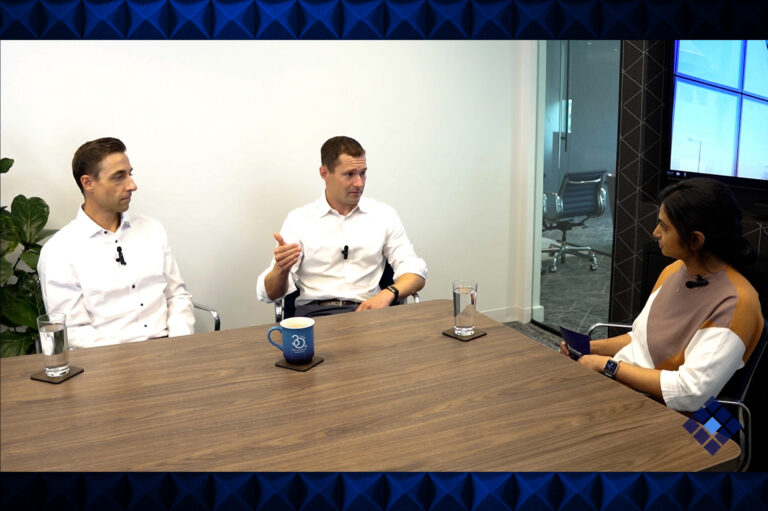
For long-term investors, the most important risks are often the ones that are hardest to predict. As climate, geopolitical, and operational risks grow more connected, how do real estate investors separate signal from noise to price risk appropriately? This episode of the Front & Center podcast, recorded in Amsterdam, takes on that question.
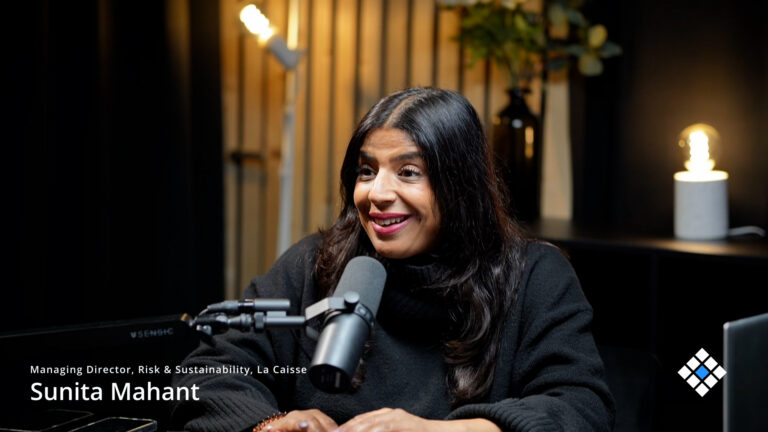
Senior Investment Strategist and Global Head of Sustainability Uma Moriarity is joined by Sunita Mahant, Managing Director, Risk Management and Sustainability at La Caisse, to discuss what risk foresight really means, why climate risk is investment risk, and how to approach the challenge of quantifying it. Uma and Sunita also explore the infrastructure and community risks investors may be underestimating, the role of independent risk oversight, and why the human skills of critical thinking and judgment matter more than ever.
01:00:05.240 — 01:00:15.960 · Uma
Welcome back to another episode of Front and Center. I’m Uma Moriarty, Senior Investment Strategist and Global Head of Sustainability here at CenterSquare.
Today we’re coming to you from Amsterdam, and we’re talking about what it really means to invest for the long term. Institutional investors can hold real estate through multiple cycles, and for that kind of investor, the risks that matter most often tend to arrive a little bit slowly. They can be shifts in climate, insurance, regulation, tenant expectations that might not necessarily show up in a five-year hold model but can reshape the value of a real estate asset over decades.
My guest today is Sunita Mahant. She’s the Managing Director of Risk Management and Sustainability, as well as the Toronto office, for La Caisse. Her path from real estate law to social impact to enterprise risk gives her an unusual and a really interesting vantage point on where value is created, where it can be preserved, and where it quietly could erode.
So let’s get into it.
01:00:57.960 — 01:01:43.710 · Sunita
Thank you so much for having me, uma. This is the first time I do a podcast, so I’m super excited. And I’m also really just touched that you asked me to to join you in the conversation today. I think, um, any opportunity you can get to share your perspective or your voice or your experiences, I think is, is is always a privilege.
So thank you very much for creating the opportunity. Uh, so for me, a little bit about my background, where do I start? So I started working in the real estate industry, um, over 20 years ago. Um, I’ve been based in Toronto pretty much my entire career, so I started working in real estate law. Um, believe it or not, law real estate law was not my favorite class in law school.
But it’s where I ended up. I ended up working in real estate.
01:01:43.750 — 01:01:44.230 · Uma
Thankfully.
01:01:44.230 — 01:02:41.540 · Sunita
For all of us. Yeah. And I’m super, super happy about it. And and I’ll tell you why. And it all come. It all makes sense shortly. So I started my career in real estate law. I worked in private practice for a really short stint, and I went in-house quickly with a large real estate developer, a Canadian developer to begin with.
And then I moved my way through The Institutional Investor, which was the real estate arm of LAX at the time, which was Ivanhoe Cambridge. That was back in 2008 when I joined Ivanhoe Cambridge in their legal team. Um, we’re always working in real estate. Obviously the, the, the firm was, uh, managing, owning, operating, developing primarily focused in retail at that time.
Ivanhoe in Cambridge had merged in 2001 and it was a shopping center company primarily. So I started there in 2008. Um, kind of worked through different, uh, call it responsibilities, starting in retail primarily and eventually moving through various different asset classes and, um,
01:02:42.740 — 01:06:40.870 · Sunita
really getting to work on the most exciting part about real estate, its development. And I shouldn’t say the most exciting part about it, the most exciting part is the people. And when you think about people, I don’t just mean the people you work with, but it’s the people that you actually, um, Create things for and to watch that come to life.
It’s super exciting. Um, so through was working in real estate law. Eventually, um, there was opportunity that arose and again, looking at people, somebody saw something in me that you don’t always necessarily see in yourself. And it was an opportunity, opportunity to go work in the human capital team.
And I never really thought that’s where I was heading. I’ve always had, you know, a desire to be closer to the investment side of the business. But it was a more strategic role and I that I thought, okay, I will go for it and jump out of my comfort zone. It was a strategic role. And I remember the head of our legal saying, well, you know, this is a really good opportunity for you to see the company with a broader lens and a more strategic way.
So I went to work in the human capital team for a while. From there, I moved into sustainable investment team, working on, uh, basically social impact of real estate essentially. So how you’re looking at buildings, how you’re looking at design, how you’re looking at operation from that social lens. Call it that experience lens, you know, inclusive design.
What does that really mean, a healthy building, what does that really mean? So move there into that team. And then from that point on, we were integrated into the pension fund in January of 2024. So the real estate subsidiaries of Lux moved into the pension fund directly. And I joined the sustainable investment team of the pension fund, and I was the real estate partner for sustainability for the real estate debt and equity team, which is super a great opportunity to be working inside the mothership again, learning and growing in different ways.
And at the same time, just shortly thereafter, I also took on the role to lead our office in Toronto. At the time, that case didn’t have an office itself in Toronto. It was the real estate subsidiaries, and today we have an established office. Great office has a responsible person. So I have those two hats today.
Sorry, from sustainability. Then I moved into the risk team. One more set I go and I’m explaining this all to you. It sounds like I’m, you know, just repeating my my resume for some reason, but there’s. Yeah, it’s all connected. And how does it all connect? You know, I talked about the human factor and I talked about, you know, the impact that we have and what we do.
And what really interested me, I think, is really being able to see how that how when we work in real estate, what does it really mean beyond, you know, the brick and mortar beyond the four walls? I used to think, well, I still think it today. Every asset that you own is a town. It’s a city. And everything goes on there.
Um, you know, and I think that’s the most interesting part about it. And back to the people. I think meeting different people throughout my career and where I am today, I think I’ve, you know, I’ve, I can draw upon different experiences that I’ve had to bring to light different perspectives today and how we look at real estate.
My responsibilities go beyond real estate today. So I’m still learning, and I think that’s the greatest thing about what I’ve been doing, is I’ve had the opportunities to learn and to to be challenged. Um, so I’d say, yeah, the connection is there’s the human connection. And then it’s really seeing how we can, you know, uh, create real estate that has a positive and, um, you know, a beneficial impact on humans.
So when we build something who it’s for and when you’re thinking about the immediate user of that asset, or are you thinking about the community around you? Um, I think those are, you know, discussions we have now when we think about sustainability, you know, how is that building an interact, how it’s we’ll get into it, I’m sure you know, the performance of the building and we both work in that space, so I’m sure we’ll get to that conversation.
01:06:40.910 — 01:06:45.270 · Uma
Yeah, a lot to unpack on that. And I think we’re I’m going to pull on those strings one at a time.
01:06:45.310 — 01:07:07.180 · Sunita
But let me say one last thing. Sorry. And I will go back to the human piece. I cannot say enough how important it is to have, uh, a voice in the room when you’re not in the room and the people that are championing you, because all of the changes that I’ve had throughout my career is due to many people who saw something in me and that supported me.
So I think that’s really important to. Yeah. And to give back.
01:07:07.300 — 01:07:13.700 · Uma
Yes, very much so. And I’m sure that you are doing the same for a lot of the other members on your team that you’re looking out for now.
01:07:13.980 — 01:07:15.860 · Sunita
Trying to. Um, yes.
01:07:15.940 — 01:07:35.420 · Uma
Okay. So maybe going into one of the hats that you wear from the risk perspective, right? When you think about maybe thematic and emerging risks, how do you think about something like risk, foresight, like what does that actually mean? And what are the types of risks that you think real estate investors are maybe underestimating today?
01:07:36.180 — 01:09:01.120 · Sunita
Good question. So I think risk foresight should not be confused with having some kind of crystal ball. And knowing the future, I think we don’t. Um, but I think it’s being able to decipher between what’s noise, what’s a signal, and being able to, uh, know what is. What? To put on the radar and to be proactive and to be ready.
To be able to identify things that you see coming so that the teams or the investor is able to make decisions, there’s still choices left. I think that’s the part of the foresight is, can we identify and bring to light the issues that are going to have an impact on the decisions on the on the investment, on the value, the long term value of the investment early enough that it will allow the investors to have the discussion, to have the debate, and to actually have the choice versus getting there too late, where the choice is already made for you.
So I think that’s really when I think about risk, foresight. That’s the philosophy I would apply for. And, you know, I, I think about, you know, things that, you know, should we have seen or did we see it coming or, you know, you think back to back in the day with retail or like e-commerce or, um, you know, everything, everything that comes and disrupts.
You want to be prepared and organized in a way that you can actually have time to think and look, but look for those things. Yes. For sure. So that’s how I think about risk. Foresight, I would say.
01:09:01.160 — 01:09:05.800 · Uma
And then what do you think is a risk that real estate investors are maybe underestimating today?
01:09:05.920 — 01:09:12.280 · Sunita
I think real estate investors are underestimating the, um,
01:09:13.520 — 01:10:23.350 · Sunita
I’d say the, the I don’t call it the ancillary, but the risks that are connected to, uh, our buildings, let’s say, or risks that are, you know, supporting the operations of a building or how it all, how it all functions. So when you think about the infrastructure around the actual asset, the things that go into when we think about water, we think about energy, we think about systems, we think about technology, I think, and the infrastructure, I think we I think there’s a lot more we need to be able to look at things with a more of a transversal lens in terms of, you know, not just the asset itself.
Sure. Um, we’ll get into it maybe when you but when you think about, let’s say, climate risk, for example. Um, you could have the best building. You could have the best building with the best standards, built with resilience, the highest elevation. But if the community around you is not built or does not have a resilience plan, that’s going to be an issue.
And I don’t know if we’re thinking about that. You know, we are in terms of we have systems in place. We systematically do assess these things. But I wonder if we’re underestimating the impact of those risks today.
01:10:23.390 — 01:10:34.150 · Uma
Yeah. Yeah. You can have a you can have a fully resilient building that is not going to get impacted by floods at all. But if all of the roads around it are flooded and the people can’t get to the building, then it’s kind of nonsensical.
01:10:34.190 — 01:10:35.950 · Sunita
Exactly. Exactly.
01:10:36.110 — 01:11:12.860 · Uma
Um, working for an institutional investor, like, okay, you end up having to manage such long dated liabilities and you’re managing risk from a much more, longer duration period. However, when you’re investing with either external managers or you have other opportunities where maybe you’re looking at real estate assets on a much shorter time period.
How do you maybe think about the mismatch in duration between the types of liabilities that you have that are much more elongated, and managing that maybe with shorter term strategies that you might invest in, that maybe don’t have that same duration.
01:11:13.900 — 01:11:24.060 · Sunita
You make me think a lot about we’re talking about real estate. So if I think about the equity side versus the debt side, for example. So if you’re thinking about investing in a development project or
01:11:25.420 — 01:11:55.570 · Sunita
call it a portfolio of new development assets. Sure. So if you’re investing on the equity side, you’re going to be you’re most likely going in for a longer term period. So the type of things, I guess the type of governance that you’re going to actually get to put in place right at the onset is going to be very different.
Yes. If you’re looking at it from the debt side or the equity side. So I think, um, while we tend we want to apply the same principles, I think in practicality, what ends up getting what you end up,
01:11:56.610 — 01:11:57.729 · Sunita
what you end up
01:11:59.490 — 01:12:59.160 · Sunita
incorporating into the deal, I’d say, is, um, you’re taking more risks. You’re taking more risks, and you’re going to need to be able to, you know, structure that in in terms of whether it’s going to be able to withstand, um, something that’s going to transpire, whether in the shorter term or in the longer term.
So the risk return adjustment, I would say when you’re looking at when our teams are looking at, let’s say, the value at risk and we’re looking at risk premium. So if you’re you’re going to be invested in an area or you’re going to be exposed to higher risks, for example, are you going to go and seek a higher premium because you know that that that potential exposure could come to reality?
So I think those are those are some of the things in some of the strategies that we would apply. Um, and I think also I mean, there’s some there’s there’s some things that are actually minimal baseline things that will have to apply on both sides. But I think, yeah, you’ll have to look at how you structure a deal from a risk return adjustment perspective.
It’s going to be different on from a debt and equity side. I’d say that’s how we would look at it.
01:12:59.200 — 01:13:28.320 · Uma
Yeah, absolutely. And you you provide risk oversight. But if I, if I kind of wind back to some of the the pieces of your career that you mentioned, right, in the way that I believe that the team is currently structured, you have an investment team that is integrating sustainability into their workflows, and they’re supported by a separate sustainable investment team.
Your team and your function kind of sits within enterprise risk and provides much more independent oversight from that risk standpoint. What does that actually look like in practice?
01:13:28.480 — 01:14:49.030 · Sunita
Good question. Um, so this has been in place for about a year now. I’d say, um, it’s quite interesting. So I’d say at a case we’re fairly mature, we’ve evolved. Sustainability has been something that has been a priority for us for a long time. And so yes, today the investor is ultimately accountable and responsible of integrating sustainability or resilience or adaptation into their investment thesis.
In the underwriting, they today can seek out support of a sustainably expert, so every asset class has a sustainability expert assigned to them. So the investment teams all today are all holding the pen. They certainly have somebody they can reach out to. And the way our governance is structured today.
Each asset class, each head of asset class is essentially responsible for decision making. They are um provided with an advisory committee on that. Advisory committee sits at a risk expert. Each asset class has a risk expert. That risk expert gets to lean on expertise within the enterprise risk group.
So in our team today, for example, um, so I sit within a group called Thematic and Emerging Risks of Portfolios. We cover geopolitical risk. We cover cyber attack. We cover sustainability.
01:14:49.030 — 01:14:53.390 · Uma
So you’re covering there is nothing topical happening for any of those things.
01:14:53.430 — 01:16:09.460 · Sunita
No, no, it’s very it’s very quiet right now and nothing’s going on. It’s actually. Well, we can get into that too, actually, because it’s quite interesting. Um, in terms of sustainability actually started in the research team years ago at the case. So it’s kind of made full round, full circle. Um, but but that that said.
So the risk expert sits in the advisory committee along with other members advising the head of the asset class. Um, the risk expert will be the challenger. They’re the second line. So we essentially are the second line. We are we are there to support the second line in terms of our expertise and sustainability is where my team focuses on.
Um, so we will we will get involved at certain thresholds and at certain periods. We are not going to be going through the fine tooth comb every transaction. Obviously there is an accountability perspective. So we will look at certain transactions and we will provide a challenge or an advice, or we will ask for certain things to be mitigated and the risk expert will bring that forward.
And if we’re satisfied it’s being addressed, mitigated, things go on. Otherwise, there is an escalation process that can go to a risk committee and things if things are extremely high risk. Um, the other thing I was going to say was
01:16:10.540 — 01:16:57.690 · Sunita
the, uh, the Sustainable Investment Team, where I said, you know, you have a risk. Each person, well, you have a responsible person for each asset class. The stable investment team is also still responsible to set the strategy for sustainable investing. So that’s that’s their role. And we are here to challenge, uh, the positioning transaction work.
And we’re really trying to, um, really move towards more portfolio driven work. So, you know, what is the percentage of time that our team is spending on actual transactions versus real portfolio risk? Sure. And that’s really where we want to be is really being able to look at the company overall and identify where those risks are sitting.
And again, going back to being proactive and starting to help our deal teams identify these risks early and to position themselves
01:16:58.770 — 01:17:49.010 · Sunita
to be able to withstand and to make sure that the transaction is well structured. Um, and we’re pragmatic, so we’re not I know people think about, you know, when you tend to think about a risk expert, you think, okay, well, you know, somebody’s going to come in and block my transaction. And that is not at all the philosophy.
Um, we’re very much, um, you know, structured in a way that we want to be able to support our teams to do, to structure deals in the best way possible to mitigate risk. And when you’re mitigating risk, you’re preserving value and you’re setting yourself up for further opportunities. So I think that, you know, risk mitigation, um, risk mitigation, value protection and value creation.
I don’t want to say that word because that’s kind of the buzzword. But those are the things that I think we can help with. Sure. Yeah.
01:17:49.080 — 01:18:13.880 · Uma
And and I, I always talk about risk from the perspective of an investor. Like we’re paid to to take risk. Right. That is what we’re doing. But it has to be price appropriately. It has to be structured appropriately. You have to make sure that you’re being paid to take the risk that it is that you’re taking, but without having a good understanding of the risks that are existing within that investment, you don’t really have the opportunity to to price it appropriately.
01:18:13.920 — 01:19:31.030 · Sunita
And, you know, you bring up a good point in terms of quantifying. That’s been the challenge, I think, for many of us in this field for a long time. You know, how are we pricing the transition? How are we pricing physical crime? Or is how do you price social issues? How do you price, you know, a healthy building those things.
And I’d say we’re really focusing on this. We’re really putting our efforts into pricing this in a way that makes sense, so that we can quantify and take measured decisions and measured risks. Yeah. So that we know we’re going in eyes wide open, and we know that there is a possibility that X, Y, and Z could occur, but we’ve set ourselves up for it.
I know I remember being in when I was in legal, um, back to like all the applying the things that you’ve learned. I remember being with the team saying, okay, this is the no fly zone, and this is where you can play and have fun and all of it. But this is where I’m going to help you. And we’re going to structure this in a way.
And I think you think the same way. Um, but yeah, I think, uh, we we are investors. We like, we are a pension fund, we’re an investment firm. Um, but we think about not just creating value for our depositors, but we have we have a fiduciary duty to protect the value of value preservation. Exactly, exactly.
Yeah.
01:19:31.070 — 01:19:51.940 · Uma
So you mentioned climate risk. You’ve said repeatedly climate risk is investment risk. As you’re thinking about quantifying that and working on quantifying that, where are you seeing that showing up first across that process? Is it as part of the underwriting and the price that you’re willing to offer?
Is a part of the exit as your rate of return. Like, where are you seeing that show up?
01:19:52.180 — 01:20:54.610 · Sunita
So, um, it’s a good question. And I’d say it’s, you know, showing up in in different areas and different facets. And we haven’t solved this yet. Well, I’ll begin by saying to you, this is something that we’re actually working on live. And we’re, we’re we’re also ensuring that we’re communicating with our peers and our partners on this because we’re not going to work in a silo in the industry.
So we really I think this is something that’s top of mind for many of our peers. Um, I’d say at the onset. So we would look at, for example, physical climate risk and you would do an assessment and, you know, it would be very like, okay, we’re assessing we’re evaluating the risk. Now we have to take it that step further.
Okay. What does that risk really mean. Um, you know, think about insurance. It’s been part of the dialog for quite some time. We again, no insurance company is going to tell you what the premium is going to be in ten years. But that’s something that we’re working closely with in terms of how do you factor that component in when you think about the different position in the capital stack, for example, what is the risk of a borrower being able to
01:20:56.090 — 01:21:19.250 · Sunita
honor their commitments and paying their loans? How are you going to factor that in? What’s how are you going to price that? Um, and we think about obviously back to resilience and adaptability. Adaptability, adaptability. We think about the CapEx like what is the cost required. So all of those factors are playing a role in how we’re looking at this.
We recently um, uh,
01:21:20.970 — 01:22:18.280 · Sunita
we recently onboarded uh, Swiss Re which is a fiscal risk climate platform. And I know all of our peers. There’s so many different tools and great things that are going on out there. So that’s that’s what we’ve onboarded. And we’re hoping, you know, it’s going to give us some directional, um, guidance in terms of looking at the quantification, the numbers obviously, um, coming from probably existing claims that have actually happened in the past, which could be directional for us.
Those are things that are being factored into how we’re quantifying or how we’re looking at quantification. But to tell you the truth, I don’t think we have we haven’t solved it yet. And I think even looking at a proof of concept, some people in our team are working on something along those lines today. And let’s see what what comes about.
And that’s just one of them. So thinking about climate risk, that’s physical climate risk. We both sit on the the the cream board together. We think about transition risk. And how do you price that. We’ve been very much involved with um,
01:22:19.360 — 01:23:20.109 · Sunita
the new tool that was launched this summer to the market called preserve. Um, when thinking about pricing that risk, what are the things that we’re taught? What are the things that we’re thinking about? What do you have to factor into your underwriting if you’re building needs to be, um, needs CapEx for alignment?
Um, you know, regulation obviously is, you know, it’s it’s regulation. So obviously regulatory requirements, that’s one thing. You may have tenant requirements. You may have tenants who want that, want to be in a building that is performing optimally, that’s efficient in energy and energy performance and obviously not emitting high levels of carbon.
So those things obviously, um, I’d say are I’d say getting closer and closer to becoming a reality. Um, but again, I will go back to say, even when we’re thinking about pricing these things, to me, it at least it’s how are you mitigating the risk? So what is the what is that financial component that you’re going to
01:23:21.310 — 01:23:48.350 · Sunita
integrate into your underwriting that’s going to give you that protection and say back to value protection, preserving the value and then thinking about the exit. So as a long term investor, if I think about the equity side, um, what’s going to happen when you’re going to sell that building, what is that value that you’re going to be able to obtain for the building that have you maintained it?
Have you taken care of it? Have you managed your assets. So yeah, those are all things that we’re thinking about.
01:23:48.390 — 01:24:38.030 · Uma
Yeah. It’s such an interesting concept to think about the ways in which organizations like yourselves are thinking about long term risks and helping to solve for those long term risks in a very different way compared to firms that are looking at much more shorter duration investment strategies where they haven’t really had to figure out, you know, if I am, if I’m planning an exit in three, 4 or 5 years, do some of these risks actually come into play in terms of how I’m underwriting?
Does it matter for the person that is going to be buying this asset in three, 4 or 5 years? We’re not sure yet. Right. So it’s difficult sometimes to really pinpoint that. But I think with the longer horizon that you have, it makes it maybe a little bit. I wouldn’t say easier, but I think it makes it a bit, a bit more concrete in terms of what it is that you’re trying to manage.
01:24:38.070 — 01:25:03.100 · Sunita
Absolutely. And I think if you if you think about it, I always like to think about it in the way of doing, let’s say you do nothing. And ultimately back to being an investor. You think you owe it to yourselves. You have to do this exercise. So if you do nothing and you don’t invest in the CapEx in your asset, or you don’t invest in a strategy,
01:25:04.220 — 01:25:09.340 · Sunita
what is that impact long term at the end of the cycle of your whole period?
01:25:11.660 — 01:25:22.660 · Sunita
Did it, um, did the value decline, you know, did it have a negative impact on the value? So to me, the cost of doing nothing has to be measured. You need to think about that. There is.
01:25:22.660 — 01:25:22.740 · Uma
A.
01:25:22.740 — 01:25:52.730 · Sunita
Cost of that, of course. And I encourage our teams to actually do the exercise in terms of, okay, this is what the CapEx is going to cost. If you’re going to replace the equipment, it’s going to be, you know, x millions of dollars versus if you do nothing, it’s going to the value. Will the value go down? Will the building not perform at an optimal level?
Will a tenant want to be in your building? Will you get the financing from a lender? All of those things factor them in and then do the math.
01:25:53.050 — 01:26:48.640 · Uma
Yeah, yeah. It’s it’s interesting, one of the conversations that I’ve had a lot while I’ve been here in Amsterdam, and I want to maybe then switch this over to, to your takeaways as well. But there has been such a dramatic shift, I think, in focus from investors on driving operational expertise, because in the current interest rate environment, that is where you’re driving returns.
You cannot really depend on asset appreciation to be the driver for returns for real estate these days. And so the focus has been on operational expertise. And sustainability is so critically tied into that aspect because it is very clear how all of that directly impacts your cash flows. Right. So I think that’s been a little bit of a different shift in mindset that I’ve heard from a lot of people while I’ve been here this week.
But as you’ve been here in Amsterdam, what are you hearing across the sustainability real estate landscape?
01:26:48.880 — 01:27:46.030 · Sunita
Um, I haven’t spoken to many people you have, but, um, just in general, I mean, obviously, uh, conversations of late, I think when I hear what you’re saying, I think a lot about resilience and I think about, well, resilience building and not just within the teams in terms of skills and how are they building these skills or how are we, um, you know, how are we looking at asset or investment management?
So I would say I would start with, um, thinking about alignment first. So in terms of the partners that we choose to invest with, um, you know, there has to be alignment in terms of the values and the convictions in terms of how our assets are managed, because we’re an investor and we hired third parties to invest or to manage our portfolio.
So I think that, um, you know, in terms of who we’re investing with and understanding their own strategies, their resources and what they have in place in terms of how they look at our assets and how they’re managing our assets. That’s something that’s top of mind for us. So
01:27:47.230 — 01:27:54.710 · Sunita
I’m really trying to align ourselves with the right partners. I think the other piece of it is you talk about, you know,
01:27:55.950 — 01:28:32.349 · Sunita
managing the assets, or I’m going to go back to maintaining value and creating or maintaining the value of the asset. I think a lot of the topics we talk about are live globally, but the solutions are local. And so I think there’s also an important nuance there when you’re talking to deal teams, different deal teams, different around the world, what it really means in terms of building resilience, or what does it really mean to manage an asset in, you know, one part of the world versus another part of the world?
The the issues are global, but the solutions are local. So I think about
01:28:33.750 — 01:29:04.660 · Sunita
I’m coming back to my climate risks, physical climate risk example. Um, you know, you really probably need to get down to the granularity, the local granularity around the asset. I think that’s a really important piece that you cannot forgo. I guess I just want to focus back on your question or to really understand.
So are you asking me in terms of the teams themselves? Um, you know, what are the what are what are the the teams that are doing that are managing the portfolios, like what requirements are they’re looking for? You know.
01:29:04.700 — 01:29:14.140 · Uma
Just in terms of the conversations that you’re you’re having, you know, what are the the types of conversations that you’re having most, most recently across the real estate sustainability space. What are you hearing from from folks?
01:29:14.140 — 01:30:06.650 · Sunita
Well, you know what we’re hearing about. We’re definitely talking to people on climate risk. That’s like back to its top of mind. And I shouldn’t say it wasn’t top of mind before, but I think people are really putting their turning their minds way closer to the topic. I mean, Mother Nature is not going away, and she’s really fierce these days.
Uh, so I would say that what gives me comfort is in talking to our peers and people in the industry today is knowing. That we’re not late or we’re. Or if we’re all we’re all late together, you know, we’re all late together. But the one thing I would say is, I feel like we have to get our act together a little faster.
I don’t think we’re going to have as much time as we’ve had, and we’ve taken a long time, even on the transition side in terms of standards, methodologies, KPIs. I think we have to move probably a little faster.
01:30:06.690 — 01:30:29.370 · Uma
Yeah, yeah. Okay. All right. Well, so I guess with that, I’m going to close this out today with a little bit of a lightning round. Um, so and I and I the super easy questions. Okay. Yeah, sure. All right. So what do you think is the most underrated risk today that looking out to maybe call it 2035 that people might have more standardized in their process?
01:30:30.530 — 01:30:43.160 · Sunita
I think it’s going back to the things that I talked about earlier, the things that are supporting the infrastructure, that helps support the built environment. I think those things are some of them come up, but I don’t. I think we’re underestimating that.
01:31:03.440 — 01:31:09.280 · Uma
What is one phrase in the real estate sustainability world that you think needs to be retired?
01:31:09.960 — 01:31:29.959 · Sunita
Okay, this is debatable. I think there’s, um, you know, a lot of debate around it, or I shouldn’t say. I don’t know if it’s debate, but when you think about CapEx, for example, you may hear the term green CapEx, or you might hear the term like the word green. And I don’t think there’s anything wrong with the word green itself.
But
01:31:31.240 — 01:31:36.680 · Sunita
just because you call something green doesn’t automatically necessarily mean that it’s, you know, it’s, um.
01:31:36.760 — 01:31:37.280 · Uma
Sustainable.
01:31:37.280 — 01:32:05.310 · Sunita
Sustainable. Uh, so I just think it’s, you know, take it with a grain of salt. I think the word green. Like I go back to the example of, uh, you know, building equipment. Does it have to be green CapEx if you’re going to replace the equipment with something that’s going to run more efficiently, efficiently?
I don’t know, but the minute I think you call it green, there’s like, you know, is it is it a must do. Do we need to have it. Does it have to be you know. So I think that that probably what I would say okay.
01:32:05.470 — 01:32:08.470 · Uma
So just CapEx doesn’t need the green associated with it.
01:32:08.470 — 01:32:10.790 · Sunita
I don’t think so. I mean, I think it’s
01:32:12.790 — 01:32:44.220 · Sunita
you know, we’ve we’ve labeled all these things. We come up with all these terms. But just if you think about investing and you think about being a good investor, are you not going to ask all of the questions that could have a potential impact on your investment? Yeah. Financial material. Um, I think that’s really how you need to look at it is are you investing for the long term and are you set up?
Are you are you set up properly so that your building can withstand? Is there a resilience built into what you’re buying or what you’re investing in. If that’s really how to look at it, I don’t think you need to. Everything needs to be labeled.
01:32:44.260 — 01:32:53.260 · Uma
Yeah. Which I think makes sense in terms of the investment team lowercase. That’s now incorporating sustainability into the way that they’re investing. It just it’s one process.
01:32:53.300 — 01:33:12.140 · Sunita
Exactly, exactly. It’s I think it’s pretty fascinating. It’s pretty exciting to see because I think, um, I think that’s really where most of our peers and everybody is headed. And I used to think and you talked about it, you know, asset management, I used to think when working in sustainability, you were essentially working in asset management, right?
01:33:12.180 — 01:33:29.060 · Uma
Okay. So what is one metric that is being used to measure or manage risk that will either not exist in 2035 or vice versa, something that we’re not considering today. That will be a metric that we use by 2035.
01:33:29.100 — 01:33:46.980 · Sunita
I’m going to go back to the CapEx, I think, forward looking CapEx. So today we think about imminent what’s what’s I’m going to call it the shorter the nearer term. Sure. I think if we’re able to build in the forward looking CapEx right at the onset, I think that would be very useful. So you’re planning. Yeah.
For future?
01:33:47.020 — 01:33:48.860 · Uma
Yeah. How far into the future?
01:33:49.540 — 01:33:56.499 · Sunita
I don’t know, I guess it depends on where you are again and what position you are, right. Um, in your whole period. But I think
01:33:57.700 — 01:34:14.860 · Sunita
regardless, I think you need to always be prepared in terms of when the time is going to come to exit. Yeah. So the better positioned you are, the better, um, planning you have in terms of financial underwriting, the less surprises you’re going to have.
01:34:14.899 — 01:34:24.020 · Uma
There you go. Okay. Anything else that you’ve been thinking about from a real estate sustainability or risk standpoint that we haven’t haven’t covered in our conversation today?
01:34:24.580 — 01:34:46.929 · Sunita
I think the world that we’re in today is going to continue to become more and more complex. I think we need to still brace for, um, turbulence. And I’m saying this because I’m being a realist. Going back to the work that we’re doing in the group that I work in, I think all of these risks are
01:34:48.330 — 01:35:13.930 · Sunita
connected. And I think it’s very important to try to apply a broader lens when you’re looking into things in terms of these different types of risks that may or may not be quantified today, but I think it’s really the way of, uh, the way we need to look at look at our assets and the lens that we need to apply. We need to broaden that lens and really continue to be prepared for uncertainty.
01:35:13.970 — 01:35:42.880 · Uma
Yeah, I think the uncertainty and level of elevated risks that we’re seeing, whether it’s geopolitical or whether it’s more, you know, more local political sustainability, climate related risks, all these things are just seemingly rising in, in prevalence and frequency in the last several years.
So definitely agree with your point that this is just a it’s just becoming a more complex world in which to deploy capital and preserve value for the long term.
01:35:43.280 — 01:36:31.320 · Sunita
You know, I’ll end with this. The other thing that we need to do, we must do, is we must, um, prepare our people. So I’ll go back to the human part. Part. Investing in our teams is so mission critical. And I know we’re we’re in the in the age of AI and being prepared, I think we owe it to ourselves to understand and appreciate the tools that we have and know how to use and learn them and apply them.
But I also think that we should absolutely not lose the component of, uh, the human ability to think critically, to have good judgment, to identify materiality. Those things, um, those type of skills are going to be more and more important as we move forward into this world.
01:36:31.360 — 01:36:55.510 · Uma
Yeah, I think about the fact that the real estate industry and maybe I’m just biased because this is my world, but it’s such a relationship driven environment. So I do hope that regardless of what happens with AI, real estate remains a people, people first business. 100%. Yeah. Thanks, uma. All right.
Awesome. Well, thank you so much to all of you for tuning in. We will be back in two weeks with another episode of Front and Center.
01:36:59.390 — 01:37:15.190 · Outro
Thanks for listening to Front and Center. You can subscribe on your favorite streaming platform, and please be sure to leave us a review. To stay up to date, you can visit our website at Center Square to access our thought leadership. Sign up for our mailing list or contact our team. We look forward to hearing from you!
The content of this podcast is informational only and represents the viewpoint of the presenters at the time of recording. It should not be regarded as a solicitation nor investment advice. All information presented is subject to change at any time based on new data analysis or market conditions. Past performance is no guarantee of future results.